The short answer
With a responsible clearance company, very little goes to landfill. Good furniture is reused, resold or donated to charities. Metal, wood, cardboard and plastics are recycled. Electrical equipment goes to WEEE recycling with data destroyed securely. Upholstered chairs that may contain POPs are sent for incineration. Jettison diverts over 90% of everything it collects from landfill or incineration.
When the van drives away from your office, it is easy to assume everything ends up in a hole in the ground. With the right clearance company, the opposite is true. Most office furniture still has a use, either as furniture or as raw material. This guide explains where each type of item goes, and why it matters to your business.
It starts with sorting on site
A good clearance is not just about lifting and loading. Every item is graded and sorted as it leaves the building. At Jettison our team ensure that every item we collect is graded, sorted and, wherever possible, donated, repurposed or recycled. Sorting on site keeps clean materials clean and stops problem items, such as upholstered chairs, from contaminating everything else.
Reuse: furniture that gets a second life
Reuse is at the top of the waste hierarchy, because it keeps an item in service and avoids the energy needed to make a new one. Office furniture that is often reusable includes:
- Desks, tables and pedestals in good condition
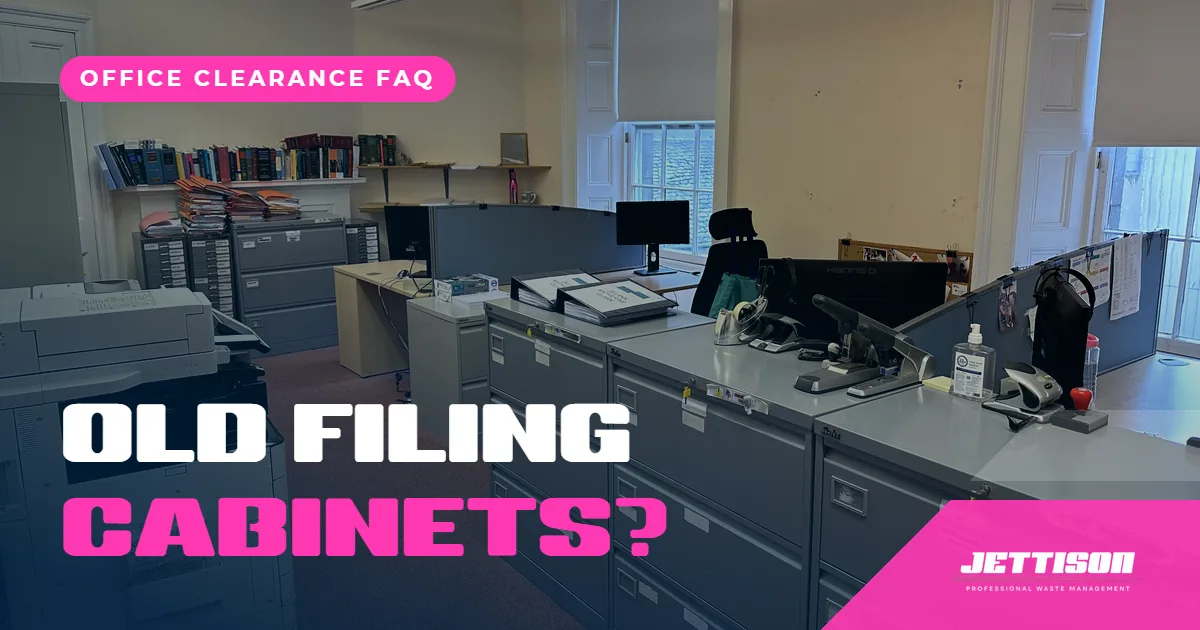
- Storage units, lockers and metal filing cabinets
- Meeting room and breakout furniture
- Shelving and racking
Items like these may be resold, reused by another business, or donated to local charities and community groups. Furniture and electronic items are assessed for their condition and potential for reuse, and wherever possible are donated or recycled. Read more in how Jettison innovates in repurposing commercial waste.
Recycling: turning furniture into raw materials
Items that cannot be reused are broken down into materials:
- Metal from desk frames, cabinets and shelving goes to metal recycling. See how to dispose of old metal filing cabinets.
- Wood and board from desks and cupboards can be recycled into new products.
- Cardboard and paper are recycled, with confidential paper securely shredded first.
- Plastics are separated where possible.
- Carpet tiles can often be reused or recycled.
Electrical equipment
Computers, monitors, printers, phones and kitchen appliances are waste electrical and electronic equipment (WEEE). They go to specialist recycling where metals, plastics and components are recovered. Any device holding data must be wiped or destroyed securely first. Our guide to secure disposal of IT equipment and the lifecycle of your office equipment cover this in detail.
Upholstered chairs and sofas
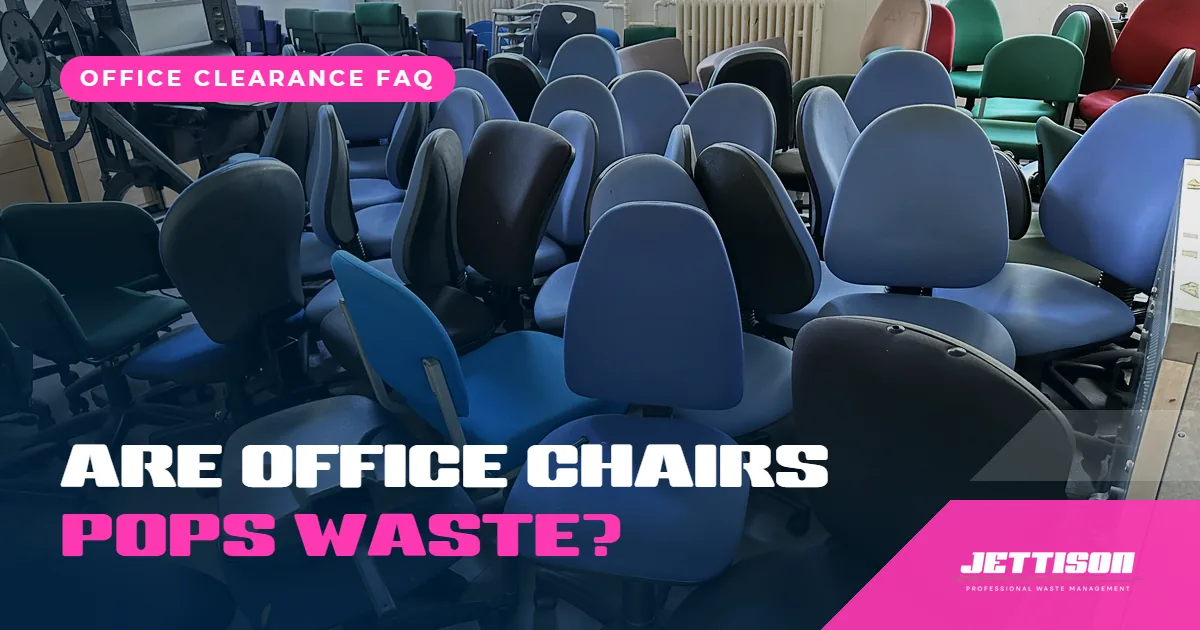
Upholstered seating is the main exception. Office chairs, reception sofas and soft seating that may contain persistent organic pollutants cannot be recycled in the normal way or sent to landfill. They must be kept separate and sent to a high temperature incinerator or energy from waste plant where the chemicals are destroyed. We explain why in are office chairs POPs waste?
Special waste
Fluorescent tubes, toner, lead acid batteries and some electrical items are special waste in Scotland. They go to licensed facilities with the right paperwork. See is office furniture classed as hazardous waste?
What is left
Only when we are unable to recycle do we send waste to landfill. Over 90% of everything Jettison collects is diverted from landfill or incineration, and you receive full documentation for everything we collect.
Why it matters for your business
- Compliance: your duty of care follows your waste. Knowing where it went protects you.
- Sustainability goals: reuse and recycling figures can support ESG and carbon reporting. See how an office clearance can help businesses meet sustainability goals.
- Reputation: clients and staff increasingly expect responsible disposal.
- Cost: reusable and recyclable items can cost less to deal with than mixed waste.
How to check where your furniture is going
- Ask your clearance company what percentage of waste they divert from landfill, and how they measure it.
- Check they are a registered waste carrier.
- Ask how they handle upholstered seating and electrical waste.
- Make sure you receive a waste transfer note, and a waste audit trail if you need one. See waste transfer notes for office clearances in Scotland.
Following the waste hierarchy
The waste hierarchy ranks the options for dealing with waste, starting with prevention, then reuse, then recycling, then other recovery such as energy from waste, with disposal to landfill as the last resort. Scottish businesses are expected to apply it, and it is the order Jettison follows on every clearance. In practice that means asking first whether an item can be used again, then whether its materials can be recovered, and only then considering disposal. It is also why sorting on site matters so much: once materials are mixed, the options further up the hierarchy are lost. Asking a contractor how they apply the hierarchy is one of the quickest ways to judge whether they will treat your furniture responsibly.
What makes furniture reusable?
Not every item can go on to a second life. Whether something is reused depends on its condition and on demand. Items are more likely to be reused if they are:
- Structurally sound, with no broken frames, legs or runners
- Clean and free from heavy staining or damage
- Complete, with keys for lockable items and all fixings
- A common, practical size and style that another business or charity can use
You can help by keeping keys together, not dismantling furniture yourself in a way that damages it, and telling your clearance company in advance about any good quality items. Our commercial office furniture clearance guide has more tips on assessing what you have.
Reuse and recycling after a liquidation or closure
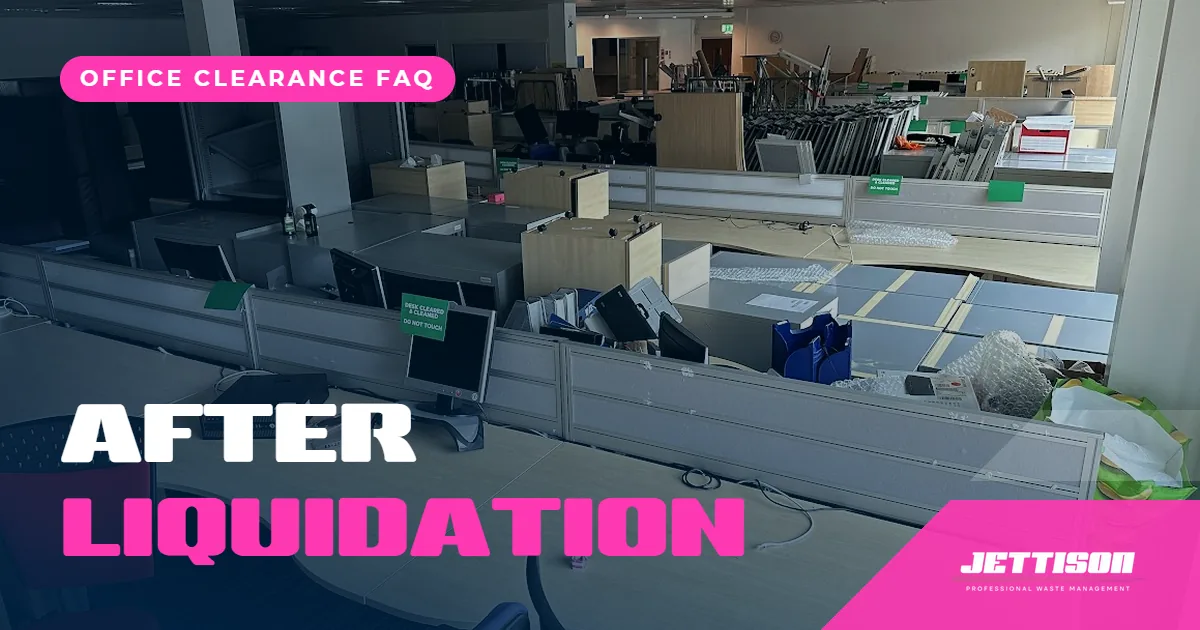
Closures can produce large amounts of furniture at once. The same approach applies: sort first, reuse what can be reused, recycle what can be recycled and send only the rest for disposal, while following the instructions of the liquidator or landlord on what can be removed.
Clear your office responsibly with Jettison
Jettison holds ISO 9001 and ISO 14001 certifications, is SafeContractor approved and provides waste audits so you know your waste has been dealt with properly. If your business is closing rather than moving, see what happens to office furniture in liquidation. To book a responsible office clearance in Glasgow or anywhere across Scotland, request a free quote.
Frequently asked questions
What happens to office furniture after a clearance?
Good furniture is reused, resold or donated. Other items are recycled into metal, wood, cardboard and plastics. Electrical items go to WEEE recycling and upholstered chairs that may contain POPs are incinerated.
Can office furniture be recycled?
Yes. Metal desks, filing cabinets and shelving are highly recyclable, and wood, board, cardboard and plastics can also be recycled. Upholstered seating is the main exception.
Do clearance companies donate office furniture to charity?
Many do. Jettison assesses items for reuse and, wherever possible, donates furniture and equipment to local charities or sends it for recycling.
How much office furniture goes to landfill?
With a responsible company, very little. Jettison diverts over 90% of everything it collects from landfill or incineration.
How do I prove where my office waste went?
Ask for a waste transfer note for every job and, if needed, a full waste audit trail showing where each type of waste was taken.