The short answer
Yes. In Scotland every load of business waste you pass to someone else must be covered by a waste transfer note (WTN), signed by you and the person taking the waste. You must keep copies for at least two years and be able to show them to SEPA or your council. Special waste, such as fluorescent tubes or toner, needs a separate consignment note.
An office clearance can feel like a simple job: a team arrives, the office empties, the van leaves. Legally, though, every item that leaves is your business waste, and you remain responsible for it. The waste transfer note is the record that proves you handled it properly. This guide explains what it is, what it must contain and how to make sure your clearance company provides one.
What is a waste transfer note?
A waste transfer note is a document that records the transfer of waste from one person to another. According to NetRegs guidance on waste transfer notes, you must make sure every load of waste you pass to others is covered by a WTN. It creates a clear audit trail from the moment waste is produced to the point it is recycled or disposed of.
The requirement comes from the duty of care for waste, which applies to every business. Office furniture, files, IT equipment and general rubbish from your premises are all controlled waste, so the duty of care applies to an office clearance just as it does to your weekly bin collection.
What must a waste transfer note include?
There is no single official form, and many waste carriers use their own version. SEPA provides an example you can use. Whatever the format, NetRegs says a WTN must include:
- a description of the waste and any processes it has been through
- how the waste is contained or packaged
- the quantity of the waste
- the place and date of transfer
- the names and addresses of both parties
- details of the authorisation of the person receiving the waste
- the licence or registration number of the person handing over the waste, if they have one
- the correct European Waste Catalogue (EWC) code
- the Standard Industrial Classification (SIC) code of your business
It must be signed by both the person handing over the waste and the person receiving it. NetRegs also warns against vague descriptions such as general waste. If the description is not good enough and the waste is mismanaged as a result, you could be prosecuted.
How long do you need to keep it?
In Scotland you must keep copies of all your waste transfer notes for at least two years, and be able to produce them on demand to SEPA or your local council. Keep the note from your office clearance with your other business records, or ask your contractor to send a digital copy.
Special waste needs a consignment note
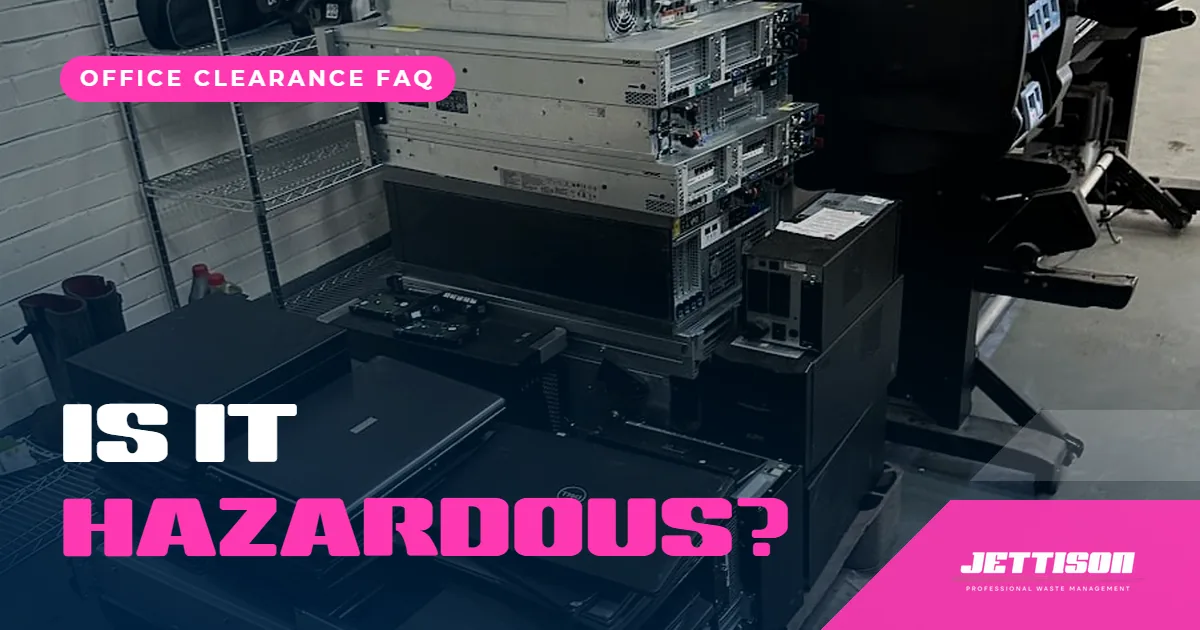
Some office items are special waste in Scotland, which is the Scottish term for hazardous waste. Common examples include fluorescent tubes, energy saving bulbs, printer toner and lead acid batteries. These need a consignment note instead of, or as well as, a standard WTN. Our guide, is office furniture classed as hazardous waste?, lists the items to watch for.
What about office chairs?
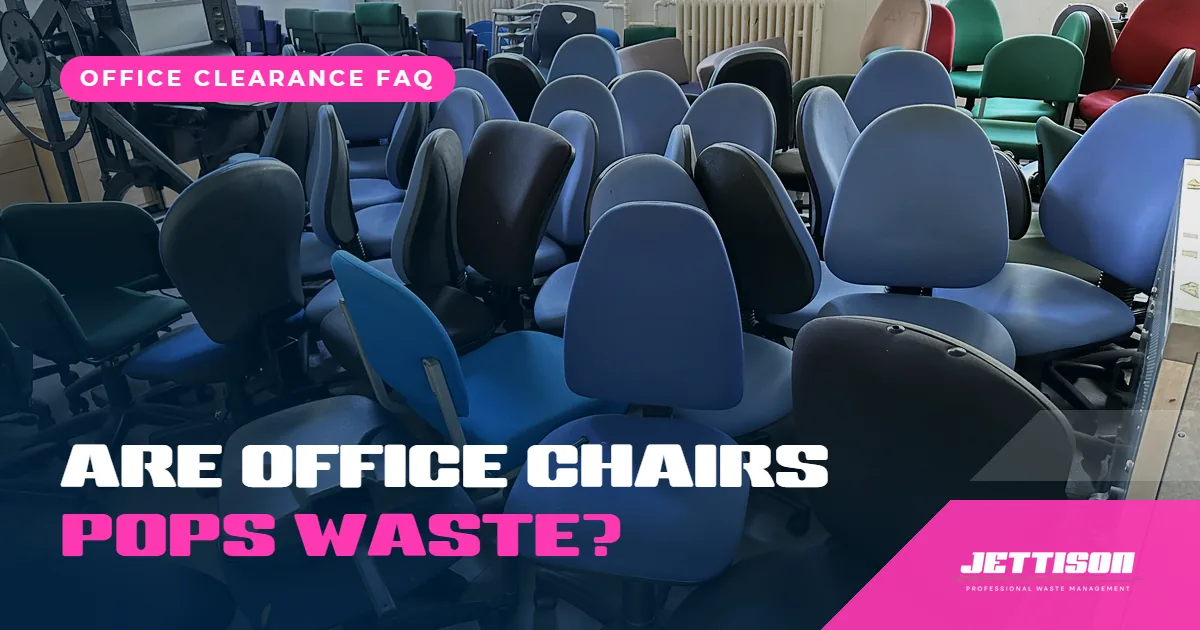
Upholstered seating that contains POPs has its own requirements on the WTN. The waste must be described with code 20 03 07 and the note should list the chemicals present or likely to be present. If your clearance includes chairs or sofas, check that they appear on the paperwork correctly. Read are office chairs POPs waste? for the full picture.
Can one note cover several collections?
Yes, in some cases. NetRegs explains that a season ticket WTN can cover repeated transfers for up to 12 months, as long as the parties, the description of the waste and the place of transfer stay the same. A one-off office clearance is normally covered by a note for that job.
Changes coming: digital waste tracking
A UK wide digital waste tracking system is being introduced to record waste movements electronically. NetRegs reports that the first phase applies to permitted and licensed sites receiving waste, and that it becomes mandatory in Scotland and Northern Ireland from January 2027. Your clearance company and the sites they use will be the ones most affected at first, but it is a good reason to choose a contractor that keeps careful records.
How to check your clearance company
- Ask for their waste carrier registration and check it before the job.
- Confirm where the waste is going and that those sites are authorised for each type of waste.
- Agree that you will receive a WTN for the job, and consignment notes for any special waste.
- Be wary of very cheap quotes from operators who cannot explain where waste goes. If it is fly-tipped, the duty of care can lead back to you.
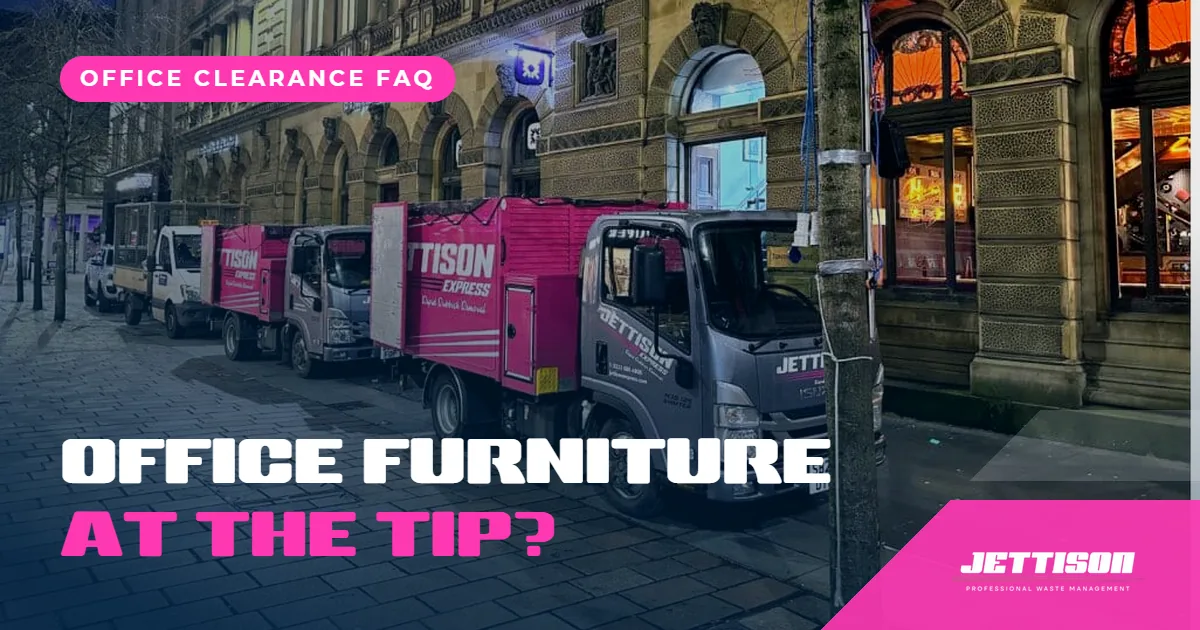
Taking the waste yourself is not a way round this. Business waste cannot go to a household recycling centre, as we explain in can you take office furniture to the tip in Glasgow?
Common waste transfer note mistakes
- No note at all for a one-off job, because it felt too small to matter.
- Vague descriptions such as general waste or office rubbish.
- Missing or wrong waste codes, especially for upholstered seating and electrical items.
- Unsigned notes, or notes signed only by one party.
- Lost paperwork, leaving you unable to show where the waste went if you are asked.
A good clearance company will prepare the note for you and ask you to check it, but as the producer you are still responsible for making sure the description is accurate.
Paperwork as standard with Jettison
Jettison provides waste transfer notes on completion of every office clearance, and we can provide a full waste audit trail if you need one, for example for ESG reporting or a landlord. You also receive after photos with your invoice. For more on your obligations when leaving premises, read the legal and environmental responsibilities of office clearance and our top considerations for commercial waste management. If you need an office cleared in Glasgow or across Scotland, request a free quote.
Frequently asked questions
Is a waste transfer note a legal requirement in Scotland?
Yes. Under the duty of care, every load of business waste passed to someone else must be covered by a waste transfer note signed by both parties.
How long should I keep a waste transfer note in Scotland?
At least two years. You must be able to produce copies on demand to SEPA or your local council.
Who fills in the waste transfer note?
Both parties sign it. The waste producer should describe the waste accurately, but many clearance companies prepare the note and ask you to check and sign it.
Do I need a waste transfer note for a small office clearance?
Yes. The duty of care applies to any amount of business waste, from a single desk to a whole building.
What is the difference between a waste transfer note and a consignment note?
A waste transfer note covers non-hazardous waste. A consignment note is used for special waste, the Scottish term for hazardous waste, such as fluorescent tubes or toner.