The short answer
Most office furniture, such as desks, metal cabinets and shelving, is not hazardous waste. Upholstered chairs and sofas are classed as non-hazardous but may contain POPs, so they must be kept separate and incinerated. Some other office items are hazardous, which in Scotland is called special waste, including fluorescent tubes, energy saving bulbs, printer toner, lead acid batteries and electrical equipment with harmful parts such as old CRT monitors.
When a business clears its premises, the question of whether anything is hazardous comes up quickly. It matters, because hazardous waste has its own paperwork, storage rules and disposal routes, and getting it wrong can lead to fines. The good news is that most office furniture is not hazardous. The detail is in the items that sit around the furniture.
Hazardous waste and special waste in Scotland
In England and Northern Ireland the term is hazardous waste. In Scotland the same category is called special waste. NetRegs explains that waste is hazardous or special if it is classified as hazardous in the European Waste Catalogue, also known as the List of Wastes. Hazardous codes are marked with an asterisk. Some entries are always hazardous, while others are hazardous only above certain concentrations of dangerous substances.
The NetRegs guide to hazardous and special waste lists typical examples that almost every business produces at some point, including chemicals such as printer toner, electrical equipment with harmful components such as cathode ray tubes, fluorescent light tubes and energy saving bulbs, and lead acid batteries.
Office furniture that is not hazardous
These items are normally non-hazardous and can be reused or recycled:
- Desks, tables and pedestals made of wood, laminate or metal
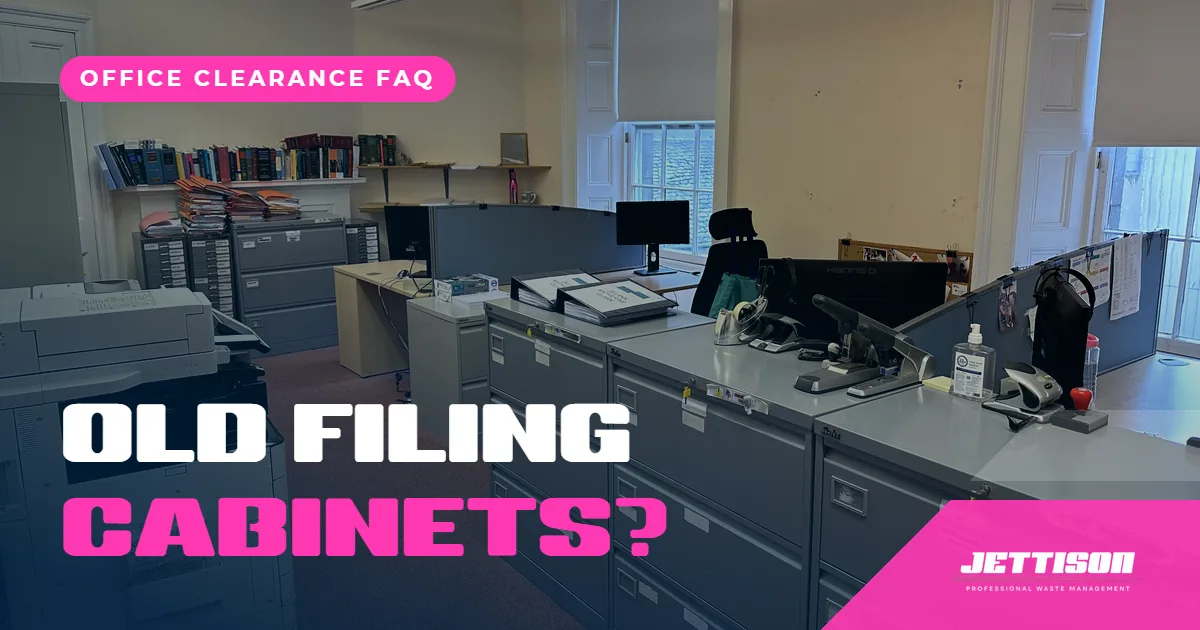
- Metal filing cabinets, lockers, shelving and racking
- Partition frames, screens and boards (check any panels on very old fit outs)
- Kitchen units and fixed furniture
- Carpet tiles
For the metal side in particular, see how to dispose of old metal filing cabinets.
Upholstered chairs: non-hazardous but still controlled
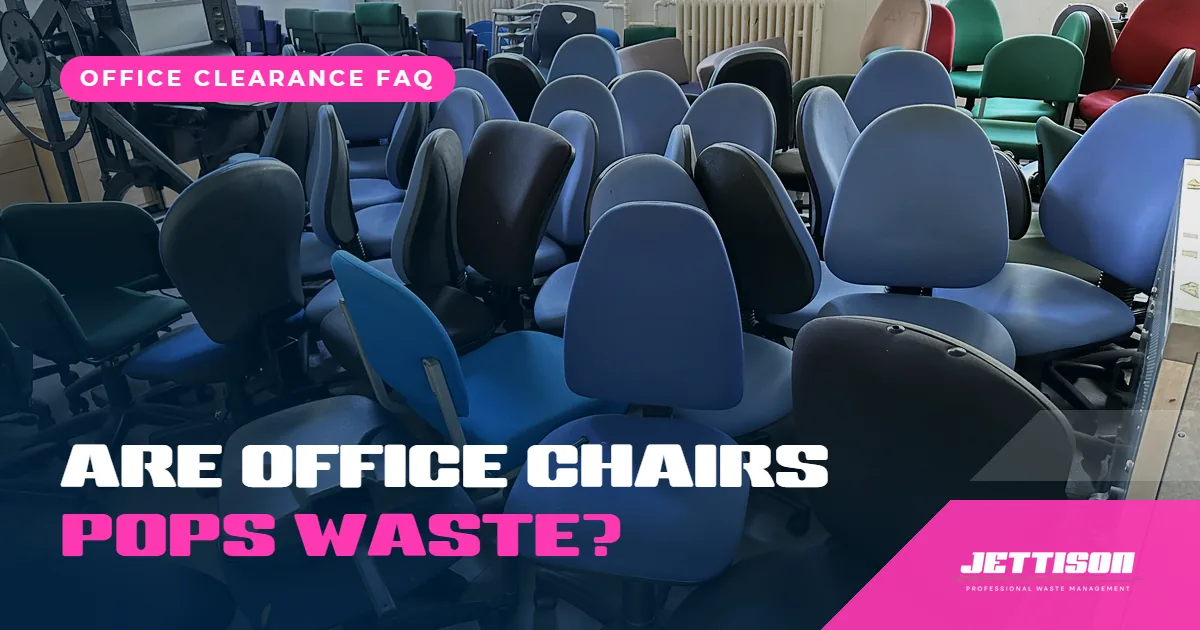
This is where many people get confused. Upholstered seating can contain persistent organic pollutants from old flame retardants. The guidance classifies waste domestic seating containing POPs under code 20 03 07, which is non-hazardous. However, it still has strict rules: it must not be mixed with other waste, must not go to landfill and must be incinerated so the POPs are destroyed. Office chairs and reception seating are covered. Our full guide, are office chairs POPs waste?, explains how to handle them.
Office items that can be special waste
| Item | Why it needs care |
|---|---|
| Fluorescent tubes and energy saving bulbs | Contain mercury. Listed by NetRegs as a typical hazardous or special waste. |
| Printer toner and cartridges | Toner is given as an example of a hazardous chemical waste. |
| Old CRT monitors and televisions | Cathode ray tubes contain harmful components. |
| Lead acid batteries, including from UPS units | Listed as a typical hazardous or special waste. |
| Fridges and water coolers with ozone depleting gases | Refrigerants must be recovered safely. |
| Cleaning chemicals and aerosols | Solvents and chemicals with hazardous properties. |
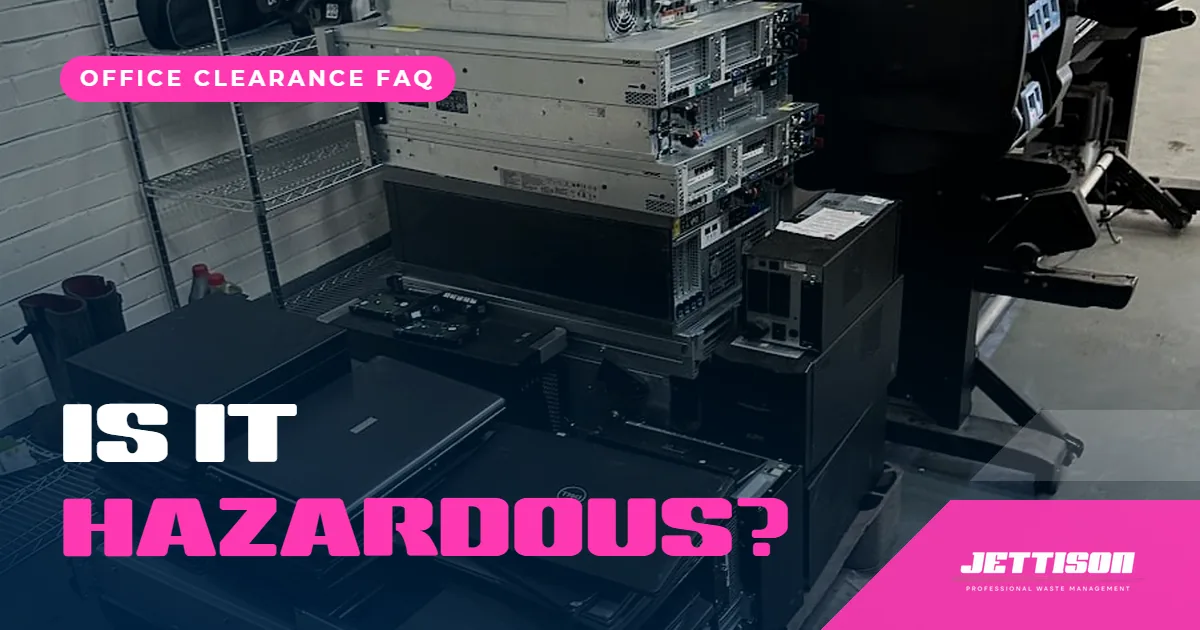
Other electrical equipment, such as PCs, laptops, phones and printers, is waste electrical and electronic equipment (WEEE). It must be kept out of general waste, recycled through the right route and, where it holds data, destroyed securely. Our guide to secure IT equipment disposal covers that process.
What extra paperwork does special waste need?
Non-hazardous office waste is covered by a waste transfer note. Special waste needs separate paperwork, known as a consignment note, and is subject to additional controls on storage and movement. NetRegs points businesses to its guidance on using consignment notes for hazardous and special waste. If your clearance includes any of the items above, ask your contractor how each one will be documented. Our guide to waste transfer notes for office clearances in Scotland explains the standard paperwork.
What about asbestos?
Asbestos is hazardous waste and is not something an office clearance team should disturb. It is most likely to be found in the fabric of older buildings rather than in furniture, for example in ceiling tiles, floor tiles or panels. If your clearance is part of a refurbishment or strip out, an asbestos survey should be carried out first. Jettison carries out an internal and external survey before any soft strip demolition work to check for potentially hazardous materials.
Who decides whether waste is hazardous?
As the business producing the waste, you are responsible for describing it accurately, even if a contractor helps you fill in the paperwork. Safety data sheets for products such as toner and cleaning chemicals can help, and SEPA or a specialist waste contractor can advise if you are unsure.
A room by room checklist
Walking through the office room by room is the easiest way to spot items that need special handling:
- Open plan areas: upholstered chairs (POPs), desk lamps and electrical items (WEEE).
- Meeting rooms and reception: sofas and soft seating (POPs), screens and AV equipment (WEEE).
- Print and post room: toner and cartridges (possible special waste), printers and copiers (WEEE, and often leased, so check before removal).
- Server and comms rooms: servers and drives (WEEE and data destruction), UPS units with lead acid batteries (special waste).
- Kitchen: fridges and water coolers (refrigerants), cleaning chemicals and aerosols.
- Ceilings and storerooms: spare fluorescent tubes (special waste), old paint and chemicals.
Why mixing waste streams costs more
When special waste, POPs seating or electrical items are mixed into a general skip, the whole load can become harder and more expensive to deal with, and in some cases the entire load must be treated as the most problematic item in it. Separating on site from the start is cheaper, safer and keeps recyclable materials clean.
How to keep your office clearance compliant
- Make a list of everything leaving the building, including small items such as light tubes and toner.
- Keep waste streams apart. Upholstered seating, electrical waste, special waste and general recyclables should not be mixed.
- Use a registered carrier and check they can take each type of waste.
- Keep your paperwork, including waste transfer notes and any consignment notes.
Jettison separates every waste stream on site as part of our office clearance service, and you receive full documentation once the job is complete. If you are clearing premises in Glasgow, our Glasgow office clearance team can include IT equipment, seating and special items in one visit. For the bigger legal picture, read the legal and environmental responsibilities of office clearance.
Frequently asked questions
Is office furniture hazardous waste?
Most office furniture, including desks, metal cabinets and shelving, is not hazardous. Upholstered chairs are non-hazardous but may contain POPs, so they must be segregated and incinerated rather than landfilled.
What is special waste in Scotland?
Special waste is the Scottish term for hazardous waste. It covers waste classified as hazardous in the European Waste Catalogue, such as fluorescent tubes, toner, lead acid batteries and some electrical equipment.
Are fluorescent tubes hazardous waste?
Yes. Fluorescent tubes and energy saving bulbs contain mercury and are listed by NetRegs as typical hazardous or special waste.
Do computers count as hazardous waste?
Computers are waste electrical and electronic equipment and must be recycled separately. Some items, such as old CRT monitors, contain hazardous components. Any device holding data should also be securely destroyed.
What paperwork do I need for special waste?
Special waste needs a consignment note rather than just a standard waste transfer note. Your contractor should explain how each item will be documented.