The short answer
Once a liquidator is appointed they take control of the company and its assets. Office furniture and equipment the company owns can be sold to raise money for creditors. Leased or hired items, such as photocopiers or rented furniture, go back to their owners. Whatever has no value is cleared from the premises, usually by a clearance company working on the instruction of the liquidator or the landlord.
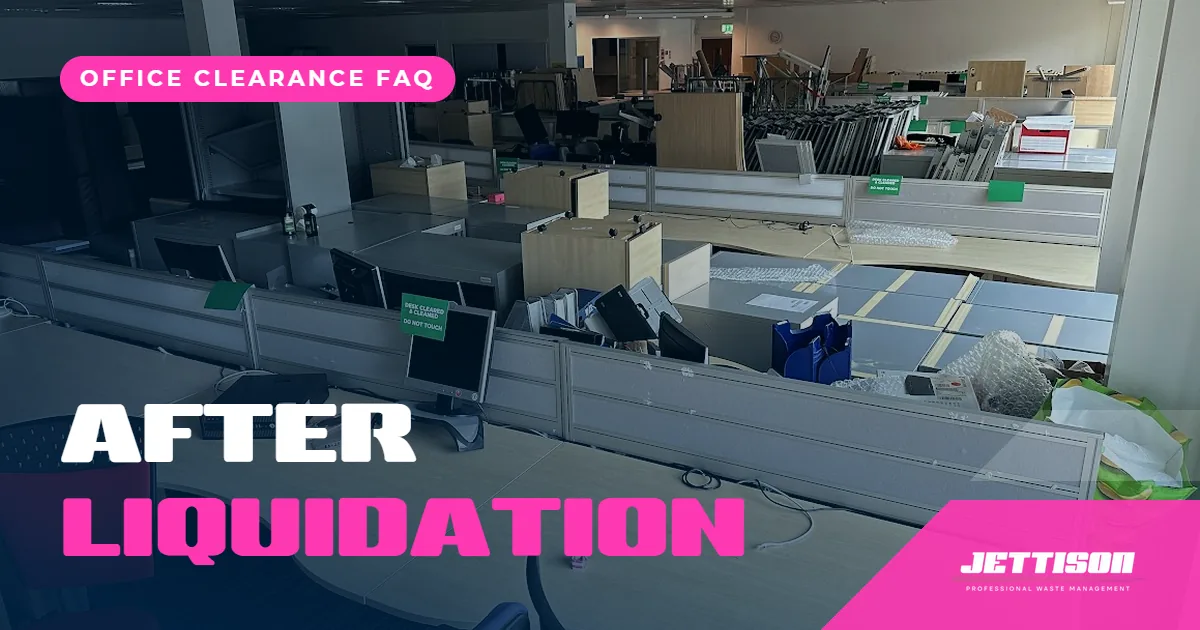
When a business closes through insolvency, the office often looks as though everyone simply walked out. Desks still have papers on them, the kitchen is full and the servers are still humming. Directors, landlords and staff then ask the same question: what happens to all of this? This guide explains the usual process in plain terms. It is general information, not legal advice, so always follow the instructions of the appointed insolvency practitioner.
The liquidator takes control
A liquidator is a licensed insolvency practitioner, or in some cases an official receiver, who runs the liquidation. According to the UK government guidance on what the liquidator does, as soon as the liquidator is appointed they take control of the business. Their tasks include selling off the company's assets and using the money to pay creditors, settling outstanding contracts and paying the costs of the liquidation.
That means directors no longer decide what happens to company property. Taking, selling or giving away office furniture or equipment without the liquidator's agreement can cause serious problems, even if the items seem to have little value.
What gets sold
Assets the company owns outright can be sold to raise money for creditors. In an office this might include:
- Good quality desks, chairs and meeting room furniture
- Computers, laptops, monitors and phones, once data has been dealt with
- Kitchen appliances and equipment
- Stock, tools and any specialist equipment
- Vehicles
The liquidator usually works with a valuer or auction house to decide what is worth selling and the best way to sell it.
What goes back to its owner
Many items in an office are not owned by the company at all. These do not form part of the assets for creditors and are normally returned:
- Leased equipment such as photocopiers, printers, phone systems and vending machines
- Rented or hired furniture and plants
- Landlord's fixtures and fittings that belong with the building
- Personal belongings of staff, which should be returned to them
What happens to the rest?
After valuable items are sold and owned items returned, there is usually a lot left: worn furniture, old files, broken equipment, kitchen waste and general rubbish. This still has to be removed so the premises can be handed back to the landlord. That is where an office clearance company comes in, normally instructed by the liquidator, the landlord or the managing agent.
The clearance has to be done properly. Upholstered chairs may contain POPs and must be separated. Computers and drives need secure data destruction. Paper records may contain personal information. Our guide to where office furniture goes after an office clearance explains how items are reused, recycled or disposed of.
What about confidential records?
Company records may need to be kept by the liquidator, so nothing should be destroyed until they confirm what is required. Once records are released for disposal, they should be shredded securely with a certificate of destruction. Our guide to secure shredding and document destruction explains how this works.
Who pays for the clearance?
It depends on who instructs it. If the liquidator arranges the clearance, the cost is usually treated as part of the costs of the liquidation. If the liquidator disclaims the lease or hands the premises back, the landlord may arrange and pay for the clearance to get the property ready to re-let. Our guide to office clearance costs in Glasgow explains what affects the price.
Advice for landlords and agents
If you are a landlord or agent and a tenant has entered liquidation:
- Contact the liquidator before removing anything, so you know what they still need to recover or sell.
- Arrange access and secure the building.
- Get a clearance quote that separates reusable items, recycling, POPs seating and electrical waste.
- Insist on a waste transfer note so you have a record of where everything went. See do you need a waste transfer note for an office clearance in Scotland?
Timing the clearance
Clearances after a closure often need to happen quickly, either to stop rent and rates building up or so the landlord can re-let the space. Agreeing access and the list of items to keep with the liquidator first avoids delays and mistakes on the day.
What about administration and closing a solvent company?
Liquidation is not the only way a business ends. In an administration, an administrator takes control and may try to sell the business as a going concern, so furniture and equipment may stay in place for a buyer. If directors close a solvent company through a members voluntary liquidation, the liquidator still deals with the assets, but there is usually more time to plan a clearance, sell good furniture and move items to a new owner. In every case, the person appointed to run the process has the final say over company property.
Common problems we see after a closure
- Food and kitchen waste left for weeks, which needs dealing with quickly.
- Personal belongings mixed in with company property, which should be set aside for staff to collect.
- Confidential files left in open offices or unlocked cabinets. See how to dispose of old metal filing cabinets for how cabinets and their contents should be handled.
- Computers and phones still holding data, which must be dealt with securely.
- Mixed waste with upholstered chairs dumped among other items, which then needs careful sorting.
A clearance team that is used to these situations can work through the premises systematically, keeping anything the liquidator needs and separating the rest for reuse, recycling and disposal.
How Jettison helps after a closure
Jettison clears offices, warehouses and commercial premises for landlords, agents and insolvency practitioners across Scotland. We work methodically, separate everything for reuse, recycling or charity donation where possible, and provide a waste transfer note and after photos with the invoice. Find out more about our office clearance service, or see how we handle a one-off office clearance in Glasgow. You can request a quote online.
Frequently asked questions
Can directors take office furniture when a company goes into liquidation?
No. Once a liquidator is appointed they take control of the company assets. Directors should not take, sell or give away company property without the liquidator agreeing.
What happens to leased equipment in liquidation?
Leased items such as photocopiers and phone systems do not belong to the company, so they are normally returned to the leasing company rather than sold.
Who clears the office after a company goes bust?
Usually a clearance company instructed by the liquidator, the landlord or the managing agent removes whatever is left after assets have been sold or returned.
What happens to company files in liquidation?
The liquidator may need to keep some records. Once they confirm records can be destroyed, they should be shredded securely with a certificate of destruction.
Who pays for an office clearance after liquidation?
If the liquidator arranges it, the cost is usually part of the liquidation costs. If the premises are handed back, the landlord often pays to get the property ready to re-let.